
Disclosure: This post contains affiliate links, which means I may earn a small commission if you purchase through them, at no extra cost to you. I may also receive a referral benefit if you book with the concierge service mentioned below. I only share things I personally used and loved.
Disclaimer: I am not a doctor, and this post is not medical advice. It’s simply what worked for me. Always talk to your doctor and follow your surgeon’s instructions for your own pre-op and recovery care.
Why I Had Surgery in Korea
I was born with an under developed optical nerve that caused me to be blind in my left eye from birth. I think because of this I have always been hyper aware of how my eyes ‘look’. I was also born with hereditary bags under my eyes that got more pronounced with age. I knew with only one working eye my choice of surgeons would be very important. I also knew I didn’t want to spend $30-50,000. I began researching and realized the most experience eye surgeons in the world were in Korea. I learned a lot along the way and am here to share!
Here I am at 5 and 50 with bags under my eyes!


What to Look for in a Surgeon
- No “ghost doctor” situations. Make sure the surgeon you consult is the one who operates. I ensured this by choosing a clinic with a single operating surgeon.
- Experience. How many years has the Surgeon been doing the procedure you want?
- Results. Look at real before and afters. Ask the clinic for examples of eyes that look the most like yours
- Specialty. A jack of all trades is nice but even better is someone who is the best at that one thing
- Type of anesthesia. General? Twilight? Local? It matters.
- Recovery modalities offered post-op. Does your surgeons office provide after care such as red light therapy, hyperbaric chamber, etc?
Questions to Ask at Your Consultation
- Will you personally perform the entire surgery?
- How many of this exact procedure have you done?
- Can I see before and afters of patients with features like mine?
- What type of anesthesia will be used, and who administers it?
- What does recovery look like, and what’s included in post-op care?
- When are stitches removed, and how long should I stay in Korea?
- What happens if I have a complication after I fly home?
- What’s included in the price, and what costs extra?
A Resource I Wish I’d Found Sooner: My Translator, Ryan
A translator makes all the difference when trying to communicate with your surgeon. I was so grateful to have Ryan there every step of the way from the first zoom call with the clinic to the operating room. I told him I wish I’d found him sooner so I could have picked his brain about all the doctors I researched. He translates for patients at so many clinics that he sees real results firsthand and knows which doctors are truly great. That’s when he told me he also offers a surgical and beauty concierge service! Anyone I refer gets a free initial Zoom consultation to see how he can help so tell him I sent you!
From there, he has two options:
- $100: If you’ve already researched clinics, he’ll review your options, give feedback, and help arrange consultations.
- $300: He handles everything, from researching the best clinics for your needs to managing all your appointments and reservations.
Bonus: Because of his relationships with the clinics, he can often get you better pricing so you’re not overpaying. 💸
He was a lifesaver for me in Korea, and I’m so bummed I didn’t find him sooner!

Website: www.onjeong.co.kr
Reach out via WhatsApp: https://wa.me/qr/M4T4QOY56VXQG1
Before You Go
Turn off Stolen Device Protection on your iPhone. Do this before you leave. It can lock you out of things when you’re swollen, recovering and not looking like yourself.
Get a letter from your doctor. Ask for a paper documenting the type of surgery you had. If you look different from your passport photo, it helps you get home smoothly. 6 days post surgery I definitely was not recognizable by my phone or passport control yet!
Where to Stay and What to Do First
Stay in Myeongdong. It’s conveniently central plus there’s great night markets, shopping and food within a few steps!
Arrive a day or two early. This gives you time to adjust to the time zone and get in the things you won’t be able to do later:
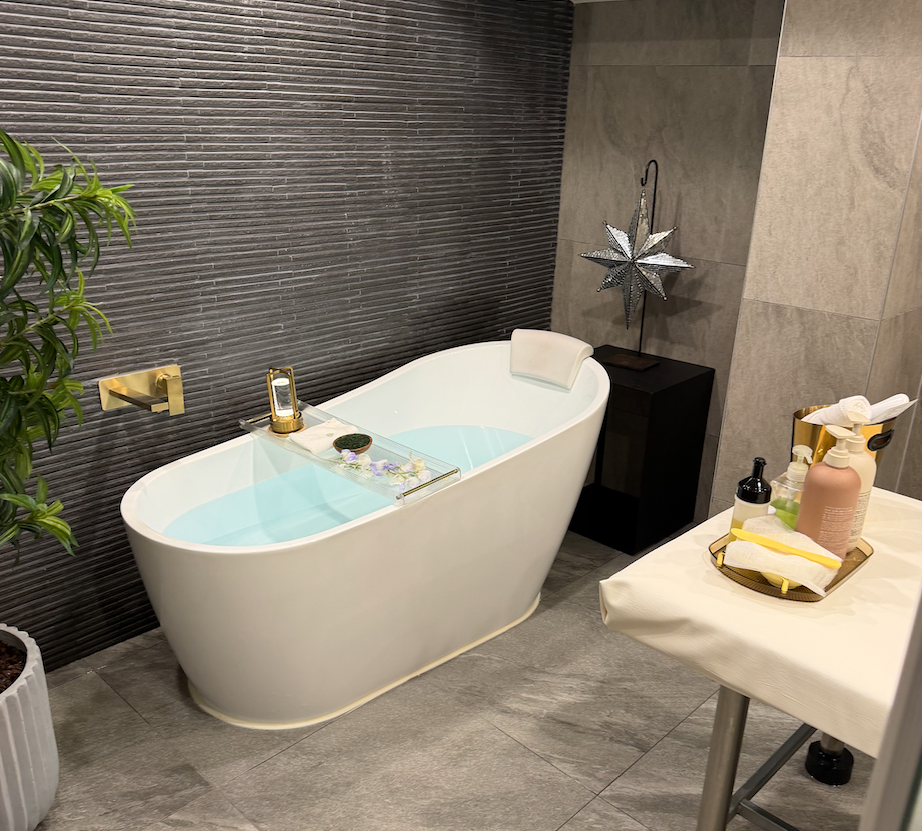
- Spa Bidan for a relaxing pre-surgery reset. Your skin will never feel so smooth!
- EcoJardin for a 19 step head spa experience and a personal color analysis
- It’s also a great idea to enjoy a pre surgery facial. Ryan (see above) can recommend a few great places!
- An enzyme sauna. This is all the rage in Seoul right now and that kind of heat is a big no-no after surgery.
- Nail polish removed. This was a requirement by my Dr. pre surgery.
- I had some glasses made for me for after surgery since I knew I wouldn’t be able to wear my contacts.

A word of caution: It’s tempting, but don’t get invasive skin treatments like Botox, Rejuran, or Ultherapy before or after surgery without checking with your surgeon first.
Stay long enough to get your stitches out. Trust me on this one. You don’t want to be hunting down a doctor back at home and hope they do a good job.
My Recovery Timeline
Everyone heals differently. This is just my experience.
- Day of surgery: My surgery was in the evening so I had to fast all day. I recommend scheduling an earlier slot so you arent hungry all day. I was nervous and excited going in and was able to sleep really well afterwards.
- Days 1-3: SO swollen. Bruising wasn’t terrible but really swollen. I felt ok, I wasn’t in pain, just a little uncomfortable and hard to see because my eyes were swollen. I also felt tired. Didn’t love having to sleep semi upright on my back. Lots of icing.
- Days 4-6: Really hard to look in the mirror and not recognize myself. I had to keep reminding myself to visualize a beautiful outcome. I missed my old face. Things I didn’t expect included being to swollen to not be able smile properly. I was so glad to have a friend with me to keep me busy and my mind off things
- Stitches out (day 6): I think techically they wanted me to get my stitches out on day 7 but I talked them into a day earlier so I could do it while in Korea. I kinda wish I would’ve saved 1 pain pill for this day. It was over pretty quick but it did pinch quite a bit I’m not going to lie. I was so happy to have the stitches out though!
- Peak swelling/bruising: Days 2-4
- When I felt “presentable”: 9 days. Although I went out and didn’t get too many strange looks in Korea. I think it’s pretty common to have surgery there and everyone was very polite about not staring at my face haha!
- Back home / back to normal life: I flew home on day 6 from Korea and was home on day 7. It felt so good to be back in my own bed!

Post-Op Care That Helped Me Heal
In Seoul:
- Getting my nails done after surgery. Ok this didn’t help me heal but it was nice to have them done once again!
- A hair wash at EcoJardin (such a treat when you can’t get your face wet)
- Foot massages. I did these sitting up since laying down was not allowed yet.
- Recovery IV with glutathione, arginine, and zinc at O2 clinic in Myeongdong
- Hyperbaric chamber at O2 clinic in Myeongdong. I paid about $278 for an IV and chamber combo!
- Acupuncture – I didn’t actually do this while in Seoul but I had it on my list of things to consider so adding it here! I understand that there are many great places you can go for $30!

I packed and recommend having on hand:
- Mini massager for a stiff neck and back after surgery: https://link.amazon/B08EQ9ryl (I left this at home and regretted it!)
- Ice packs: https://link.amazon/B0g1pzgxi
- Red light therapy: https://thelumebox.com/pages/lb68/?oid=3&affid=8888&discount=elevatedtraveladventures This handheld device is perfect!
- Wedge pillow and/or your favorite pillow for sleeping elevated: https://link.amazon/B09knHQXc and https://link.amazon/B06odVhbi
- Arnica pellets: https://link.amazon/B07a1DQ04 (I took these constantly after surgery)
- Arnica gel: https://link.amazon/B0dQHrcAF (Apply to non broken skin)
- Bromelain: https://link.amazon/B0fIsaRDN (Take only AFTER surgery)
- Brush gua sha: https://link.amazon/B079zKwlY This felt SO nice on my face. I basically did this constantly.
- Collagen supplements: https://link.amazon/B0g2O5oS5 and https://link.amazon/B0bLvqEx1
- Eye patches. Keep them in the fridge for extra cooling: https://link.amazon/B0i5k5zdE (budget version: https://link.amazon/B0efzhXcD) I loved the ones my clinic sent me home with as well but left them in the hotel freezer on accident when I left 🙁
Always check with your surgeon before using any supplement or product during recovery, including arnica and bromelain.
Quick Packing Checklist
- Passport and your surgeon’s letter
- Phone with Stolen Device Protection turned off
- Wedge or favorite pillow
- Ice packs and cooling eye patches
- Mini massager
- Arnica, bromelain, and collagen (if your surgeon approves)
- Red light device
- Loose, front-opening clothes you don’t have to pull over your head
- Sunglasses and a loosely fitted hat
Safety and Logistics Basics
Confirm all of this with your surgeon, since it varies by procedure and person.
- Flying home: Ask how soon it’s safe to fly and whether to wait until stitches are out.
- Complications: Ask what to do and who to contact if something goes wrong after you leave Korea.
- Travel insurance: Check whether your policy covers elective surgery abroad. Many don’t.
- Follow-up care at home: Consider lining up a local doctor you can see if you need a check-in. Or ask your clinic if you can contact them post surgery with questions
- Medical records: Bring copies of your surgery details and medications.
What It Cost Me
Approximate figures, which will vary by clinic and year.
- Surgery: $5600 (upper and lower bleph plus fat transfer to my face)
- Lodging: $150 per night
- Post-op treatments (IV, hyperbaric, acupuncture, etc.): $300
- Translator/concierge: $300
- Flights: I used points to travel but I saw flights from $600 round trip
- Extras (food, transportation, shopping): I’d plan on $50 per day
- Total: about $8,000 depending on how long you stay and how much shopping you do at Olive Young haha!
What I’d Do Differently
- Use Ryan my translator as my concierge! It would’ve saved me SO much time!
- I’d have probably should’ve chosen to make an additional trip and do less all at once. I think this would’ve made my recovery easier to break up the procedures. So for me this would’ve meant doing only the upper/lower bleph or only the fat grafting or only fat grafting and lower bleph, etc. Less is more. (Don’t get me wrong, the outcome I am super happy with but it just woud’ve made recovery easier)
FAQ
How long should I stay in Korea?
Long enough to get your stitches out, and ask your surgeon for their exact recommendation. I stayed 6 days.
Did you travel alone?
No I had a friend with me but you CAN go alone, especially if you use Ryan.
Would you do it again?
I would!!
Final Thoughts
Plan ahead, choose your surgeon carefully, give yourself time on both ends of the trip, and treat recovery like part of the experience. Questions about my experience? Drop them in the comments.
Want to stay in touch? Follow me here on INSTAGRAM
Reminder: I’m not a medical professional. Please follow your own surgeon’s guidance for your surgery and recovery.